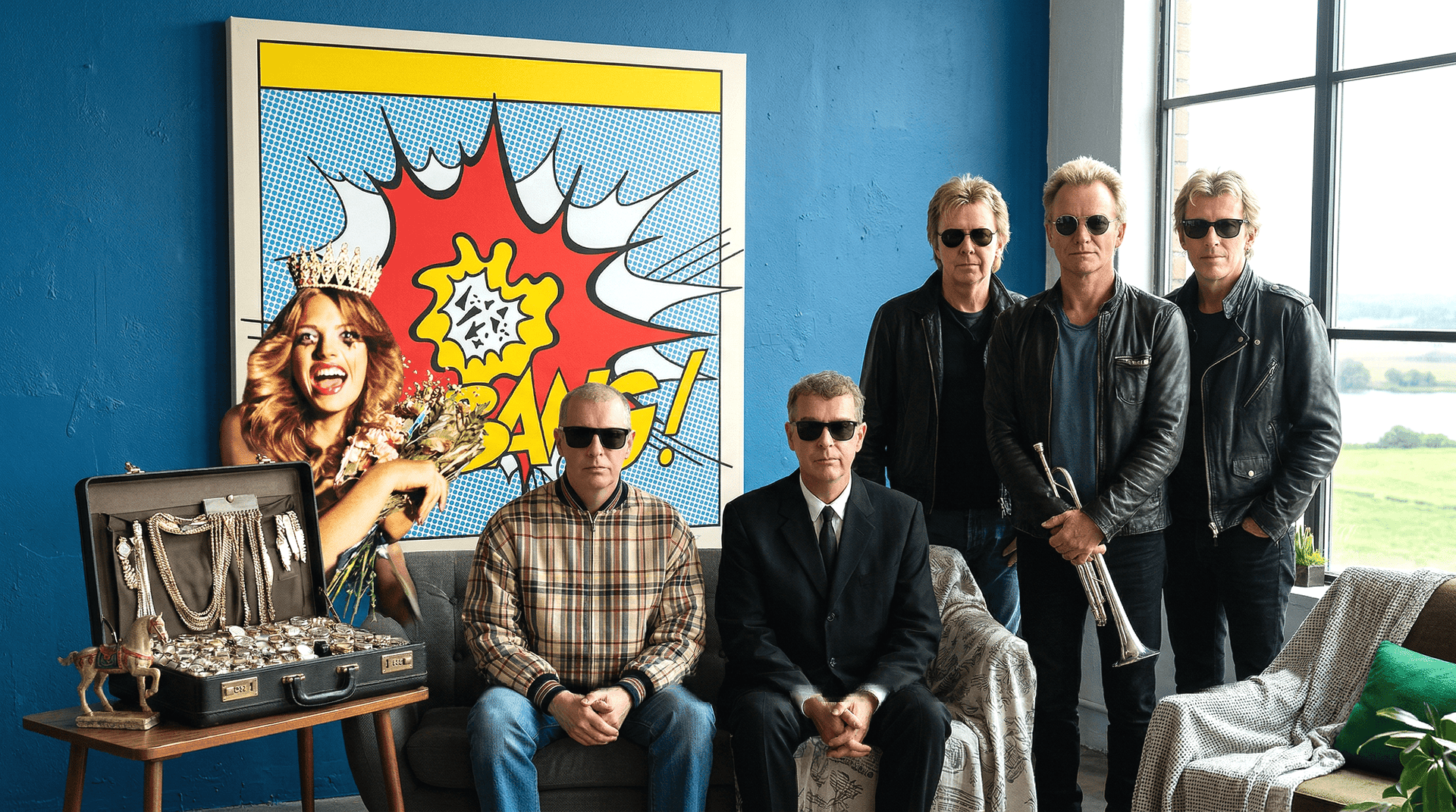
A Musical Voyage: From Synthpop Dreams to Rocks Raw Edge

Discography (The Complete Singles Collection 1985-1991) by Pet Shop Boys 🎶


The Pet Shop Boys’ Discography: The Complete Singles Collection 1985-1991 is not just a compilation; its a captivating journey through the duos early years as synth-pop pioneers. Released on November 4, 1991, this collection encapsulates their essence by featuring every A-side single from their 1985 debut through to 1991, including two new tracks: “DJ Culture” and “Was It Worth It?”. Lets explore why this album remains a significant milestone in music history.
The Art of Creation 🎤
The creation of Discography was a meticulous effort reflecting the band’s evolution. Compiled under the label Parlophone, it drew from a vibrant array of producers—including Stephen Hague, known for his sleek grooves, and Trevor Horn, whose maximalist arrangements shaped many of the bands most iconic hits. The duos mastery laid in blending programmed drums with rich synthesizer sounds, resulting in the perfect dance-pop formula. Each track culled from their first six years had its own unique signature while contributing to a cohesive narrative thread that told the story of 1980s pop culture and the journey of sexuality and identity.
What Makes It Distinctive? 🌟
Musically, Discography is a rich tapestry of synth-pop interwoven with elements of house, hi-NRG, and Euro-disco. The album is defined by lush electronic soundscapes, punchy basslines, and catchy melodies that reflect the eras new-wave aesthetic. Songs like West End Girls, It’s a Sin, and Domino Dancing exemplify a quintessential Pet Shop Boys style—a blend of introspective lyrics with irresistible hooks. This perfect balance between commercial appeal and intellectual depth allowed them to stand apart in the pop landscape.
Impact, Reception & Legacy 🏆
Upon release, the album was met with both critical acclaim and commercial success. It secured the No. 3 spot on the UK Albums Chart and earned multi-Platinum certifications across several countries. Critics celebrated it as a definitive collection highlighting the duo as one of pop historys most successful acts. Decades later, Discography continues to resonate with new listeners, often cited as an essential entry point into their discography. Its influence is undeniable, having paved the way for future artists to blend personal narratives with pop sensibilities.
Echoes of an Era 🌍
While grunge was taking hold in the early 90s, Discography thrived in an opposite vein—delivering a polished, sophisticated pop experience at a time when alternative rock was dominating the charts. It showcased how electronic music can coexist with the raw authenticity of grunge, offering a danceable escape while maintaining a depth of emotion and commentary. This collection filled a gap in musical diversity of the decade, illustrating that pop music could truly be reflective, meaningful, and still irresistible on the dance floor.
In essence, Discography: The Complete Singles Collection 1985-1991 is a celebration of Pet Shop Boys artistry—a snapshot of a remarkable era in music history that perfectly marries innovation with nostalgia, ensuring its place as a beloved gem in the hearts of music lovers everywhere.
- View Discography (The Complete Singles Collection 1985-1991) on russ.fm
- View Pet Shop Boys on russ.fm
Greatest Hits by The Police 🎸


The Polices compilation album Greatest Hits is a powerhouse collection that captures the essence of the band’s eclectic musical journey. Released in 1992 on A&M Records, this compilation serves as a vital overview, highlighting the bands fusion of rock, reggae, punk, and new wave influences that made them one of the defining acts of the 1980s.
Recording History and Creation Process 🎤
Although Greatest Hits is a compilation, the tracks it features were meticulously selected from the band’s five studio albums recorded between 1978 and 1983. Each song documents a phase in The Polices development—from the raw, live-band feel of their early albums, Outlandos d’Amour and Reggatta de Blanc, to the more polished sound found in later works like Ghost in the Machine and Synchronicity. The compilation masterfully captures this evolution without introducing any new material, allowing listeners a linear glimpse into the bands growth from punks to pop icons. In 2022, a remastered version was released for the album’s 30th anniversary, showcasing the ever-demanding legacy of The Police.
Musical Style and Distinctiveness 🎶
What makes this compilation distinctive is its seamless blend of various genres. The Police stand out with their unique sound that combines tight rock riffs with reggae rhythms, punctuated by Stings literate songwriting and Copelands syncopated drumming. Tracks like “Roxanne” and “Message In A Bottle” show how reggae influences are interwoven with rock, while pop elements are evident in chart-toppers like “Every Breath You Take”. This fusion created a dynamic feel that was both radio-friendly and infused with the energetic spirit of punk—a testament to their versatility and musicality.
Critical and Commercial Reception 🏆
Upon its release, Greatest Hits was met with widespread acclaim. Critics described it as a definitive introduction to The Police, aptly summing up their most significant hits and cultural impact. The album performed exceptionally well commercially, cited as a “multi-platinum selling global smash”—a fitting label for a band that sold over 75 million records worldwide. This compilation has since become a staple for new listeners and longtime fans alike, reestablishing The Polices place in the pantheon of rock legends.
Legacy and Influence 🌟
The legacy of Greatest Hits extends far beyond its initial release. It has preserved The Polices narrative as a cornerstone of rock music history and continues to inspire new artists across various genres. In addition to charting global hits, The Polices innovative blend of reggae with rock paved the way for future bands navigating the mainstream, helping normalize diverse rhythms and subject matters in popular music. Their influence can be felt in genres ranging from alternative rock to ska-punk, continuing to resonate in today’s music landscape.
In a nutshell, Greatest Hits by The Police is far more than a simple compilation; its a landmark album that beautifully encapsulates the band’s journey while celebrating their ability to connect deeply with listeners across generations. For fans and newcomers alike, it remains an essential listening experience that highlights the innovative spirit of one of rock’s most dynamic trios.
Fashion Nugget by Cake 🎶


Released on September 17, 1996, Fashion Nugget stands as Cakes second studio album, carving a distinctive niche within the sensational landscape of 1990s alternative rock. Known for its unique blend of deadpan humor and social commentary, this album combines an eclectic mix of rock, funk, and even country influences to create a sound that was both fresh and relatable. Let’s dive into the details!
Recording History and Creation Process 🛠️
Recorded at Paradise Studios in Sacramento, California, Fashion Nugget was produced primarily by the band itself, continuing the DIY ethos established in their debut album, Motorcade of Generosity. Cakes songwriting, led by John McCrea, reflects a collective input with contributions from other members, including guitarist Greg Brown, who wrote the standout single “The Distance”. Utilizing a lo-fi approach, the band aimed for a raw sound that captured their live energy, resulting in minimal studio trickery. This authenticity helped establish Cake’s identity as an indie band within the confines of a major label, Capricorn Records.
Musical Style and Distinction 🎸
What makes Fashion Nugget so distinctive is its genre-blending style. Cake incorporates punk, alternative rock, funk, and even touches of jazz. Musically, the album is marked by a dry production style and McCrea’s deadpan vocal delivery, which contrasts sharply with the emotional intensity that characterized much of 1990s rock. Songs like “The Distance” feature tight, syncopated rhythms that give an understated funk feel, with the unique addition of trumpet lending an original touch not commonly found in rock music at the time. The music feels both playful and serious, allowing listeners to groove while pondering deeper societal critiques.
Critical and Commercial Reception 🏆
Upon its release, Fashion Nugget achieved substantial commercial success, being certified Gold and then Platinum by the RIAA thanks to hits like “The Distance” and a cheeky cover of Gloria Gaynors “I Will Survive.” Critics lauded the album for its sharp lyrics and innovative sound selections, solidifying its status as a cult classic in the alternative scene. Although it may not have received universal acclaim initially, retrospective reviews have elevated it as one of the key albums of the era, blending humor with a twist of societal observation.
Lasting Legacy and Influence 🌍
The influence of Fashion Nugget is profound. It helped pave the way for genre-blending in alternative rock, making eclecticism almost an expectation in the genre. The album’s deadpan, ironic lyricism has resonated with countless bands since, demonstrating that catchy tunes paired with reflective, observational lyrics could thrive. Moreover, Cake’s use of trumpet as a central instrument challenged conventions, encouraging other bands to explore diverse instrumentation. Even decades later, tracks from Fashion Nugget regularly make appearances in popular media, showcasing its enduring relevance.
With its rich tapestry of sounds and themes, Fashion Nugget is not just an album—it’s a snapshot of 1990s culture, marked by a unique blend of humor, social commentary, and eclectic musical influences. Whether youre discovering it for the first time or revisiting it, its an album that resonates with both nostalgia and refreshing originality.
Live Through This by Hole 🎸


When you dive into Live Through This, the iconic second album from Hole, youre transported to the chaotic and powerful sounds of the early 90s grunge era. Released on April 12, 1994, just one week after Kurt Cobains tragic death, this album became a defining cornerstone of alternative rock, blending raw emotion with incisive commentary on identity, feminism, and the struggles women face in both society and the music industry.
Recording History & Creation Process 🛠️
Live Through This was meticulously crafted during late 1993 under the supervision of producers Sean Slade and Paul Q. Kolderie, both well-versed in the indie rock scene. The bands lineup of Courtney Love (vocals, rhythm guitar), Eric Erlandson (lead guitar), Kristen Pfaff (bass), and Patty Schemel (drums) played a crucial role in shifting from the unrefined sound of their debut, Pretty on the Inside. Love aimed for something that would balance melodic components while retaining their aggressive edge, stating she wanted to produce an album that would shock critics who believed they couldnt craft something “soft.”
Contrary to some media portrayals, especially post-Cobains death, Love insisted that Live Through This was a collaborative effort, emphasizing that it was a “full band record.” Cobain did have a fleeting presence during the recording sessions, contributing backing vocals that were ultimately scrapped. This myth of a Cobain influence is often oversold, overshadowing the potent songwriting and musical prowess of Hole itself.
Musical Style & Distinctiveness 🎤
The albums musical style is a whirlwind of alternative rock, punk, and grunge influences, embodying the raw energy of the era. Critics have noted that Live Through This is deeply rooted in grunge, described as “combining noise, pop hooks, and raw emotion.” The urgency of punk is palpable, thanks to Love’s fiercely powerful vocals and guitar work that alternates from murky distortions to bright, ringing melodies.
Tracks like “Violet”, “Doll Parts”, and “Miss World” showcase the albums quintessential blend of manic guitar riffs, pointed lyrics, and dynamic shifts between soft and loud. The arrangements are as much about emotional nuance as they are about musical aggression, portraying the tumult of Loves experiences with beauty standards and media scrutiny.
Critical Reception & Lasting Legacy 🌟
Upon release, Live Through This was met with critical acclaim, heralded as a landmark album within the burgeoning alternative rock scene. Spin magazine even named it “Album of the Year,” while it soon achieved multi-platinum status and charted in multiple countries, propelled by memorable singles that resonated with both audiences and critics alike.
Its legacy is profound; the album has since been recognized as a seminal work that exemplifies the challenges and triumphs of women in rock. It paved the way for future generations of female artists, blending confessional lyrical content with powerful musicality. Its influence can be traced in the works of bands like Bikini Kill and PJ Harvey, fortifying the narrative of womanhood in the realm of punk and alternative rock.
The Impact of DIY & Alternative Spirit ✊
Even though Live Through This was produced on a major label, its spirit thrived in the DIY ethos of punk. The band was incredibly focused on the raw essence of their songs, pushing back against the narrative that Love was merely a figurehead accompanied by talented men. Loves unapologetic voice, coupled with the aggressive backing of her bandmates, created a collective statement about authenticity and struggle.
In summary, Live Through This is not just an album; its a beacon of power for women in music and an emotional touchstone that continues to resonate. The combination of fierce lyrics, dynamic instrumentation, and the powerful delivery of the band makes it a timeless classic. If you haven’t yet explored this masterpiece, it’s time to dive into its depths and uncover the raw energy that has influenced countless artists and genres since its release.
Getting Killed by Geese 🎸


If youre looking for a bold statement in the indie rock realm, look no further than Getting Killed by Geese. Set to drop on September 26, 2025, this album signals a thrilling evolution for the Brooklyn-based band, showcasing their unique blend of sounds and their growth as artists in a rapidly changing musical landscape.
🎶 Recording History and Creation Process
The journey of Getting Killed took shape in a whirlwind of creativity, as the band recorded the album in just ten days at Kenny Beats Los Angeles studio. Geese was drawn to him after seeing his work at a festival, and this serendipitous collaboration aims for an immediacy that is often lost in modern music production. The rapid recording schedule left little room for overdubbing, promoting a raw and vibrant energy throughout the album. Described as a “chaotic comedy,” the combination of shambolic structure with passionate performances gives the record an elusive feel, balanced between polished sound and adventurous experimentation.
🎼 Musical Style and Distinction
Musically, Getting Killed is described as a full-fledged deviation from Geeses earlier works, epitomizing their expansion and experimentation. Blending elements of indie rock, alternative, and even touches of post-punk, the album plays with structure while remaining guitar-centric. Critics note its majestic tumultuous percussion and richly layered guitar arrangements, making it a representative piece of the 2020s indie rock landscape. First single “Taxes” captures this essence perfectly, with eruptive guitars and an intricate vocal approach, underpinning the albums overall vitality.
🌍 Cultural Themes and Relevance
Thematically, Getting Killed digs deep into the anxieties of youth and identity formation in a hyper-commercialized world. Songs like “Trinidad” and “Cobra” tap into feelings of financial struggle, self-doubt, and existential angst, framed through a mix of humor and sharp lyricism. This duality is particularly poignant in “Taxes,” which uses hyperbolic metaphors to personify the pressures of adulthood, offering a biting reflection on morality and guilt. In a world still grappling with the aftermath of the pandemic, these themes resonate louder than ever, making the album not just a musical journey, but also a cultural commentary on navigating adulthood.
🚀 Legacy and Influence
While Getting Killed has yet to be fully released, pre-release acclaim establishes it as an essential listen of 2025. Descriptions of the album as Geeses “most unhampered and creative” work encourage a conversation about the bands role in the evolving indie scene. With a DIY ethic and independent spirit driving their creative choices, Getting Killed represents a moment for Geese to redefine themselves while still embracing the fluid genre landscape of contemporary music.
In essence, Getting Killed is not just another album; its a declaration of independence and intention from Geese as they leap forward into new territories. Mark the date on your calendar, because this album promises to be as transformative as it is entertaining!
Graceland by Paul Simon 🎶


Paul Simon’s Graceland, released in late August 1986, marks a turning point in his career and the music scene of the 1980s. After facing creative and personal challenges, including the failure of his previous album Hearts and Bones and a tumultuous divorce, Simon found inspiration in unexpected places—specifically, in South African music. Let’s dive into the fascinating world of Graceland, exploring its creation, distinctive sound, and lasting legacy.
The Recording Journey: From Setbacks to Johannesburg ✈️
The genesis of Graceland is a remarkable tale of exploration and collaboration. Disheartened by his earlier failures, Simon became captivated by a bootleg of South African mbaqanga music. In February 1985, he traveled to Johannesburg during a time of apartheid—a politically and culturally fraught period—to connect with local musicians. Collaborating with Roy Halee, Simon recorded live sessions at Ovation Studios, employing an innovative method where he built songs around recorded grooves instead of having completed songs prior to recording. This marked a significant departure from his previous folk-oriented writing style. The final product consisted of contributions from over 50 musicians, blending African rhythms with folk narratives, creating a multicultural mosaic.
Musical Style: A Fusion of Folk, Rock, and World Music 🌍
What makes Graceland so distinctive is its seamless fusion of various musical styles. While rooted in Simons folk tradition, the album incorporates rock elements and South African genres. Songs feature vibrant mbaqanga guitar licks and isicathamiya vocal harmonies, all while maintaining accessible pop structures akin to 1980s mainstream music. Even tracks like “You Can Call Me Al” and “Diamond on the Soles of Her Shoes” incorporate rich storytelling amidst upbeat instrumentation, illustrating the cross-cultural conversations that Simon was eager to embrace. It’s a sound that calls back to the joy of rhythms while also reflecting deeper themes of love, journey, and identity.
Reception and Influence: A Cultural Phenomenon 💿
Upon its release, Graceland faced some skepticism, but it soon became a critical and commercial darling. Critics lauded the album for its innovative blend of Western and African sounds, and Simon was celebrated for his narrative prowess. Winning the Grammy Award for Album of the Year in 1987 and achieving multi-platinum sales worldwide, it has since been recognized as one of the most significant albums in history. Its influence is undeniable, helping to popularize world music and expose Western audiences to African musical traditions, paving the way for countless artists and collaborations.
Legacy and the Visual Era: A New Wave of Pop 🌟
The relationship between Graceland and MTV also shaped its legacy. The music videos for tracks like “You Can Call Me Al” introduced Simon to a new generation, showcasing a clever, lively aesthetic that resonated with audiences and kept the album in the limelight. The juxtaposition of Simon’s folk roots with the glitzy, polished production of the MTV era neatly encapsulates the blend of artistry with commercial sensibility. This balance has influenced many artists who sought to traverse the line between mainstream pop and deeper, underground movements.
Overall, Graceland stands as a defining work that encapsulates a unique moment in music history—a celebration of collaboration, a testament to artistic resilience, and a venture into the unknown that opened doors for future musical exploration and appreciation. Whether through its infectious rhythms or poignant lyrics, Simon’s journey with Graceland continues to resonate with listeners across generations, making it an enduring classic.
History Never Repeats (The Best Of Split Enz) 🎶


Split Enz’s History Never Repeats – The Best Of Split Enz is more than just a typical greatest-hits compilation; it encapsulates the band’s significant transformation from eclectic art-rock pioneers to internationally recognized new-wave icons. Released first in the U.S. in 1987 and followed by a version tailored for New Zealand and Australia in 1989, this album showcases their most beloved tracks recorded between 1976 and 1984, solidifying their legacy as one of New Zealand’s most influential rock bands.
The Recording Journey 📽️
The album draws from a diverse span of time in Split Enz’s recording history. It compiles tracks from their earliest experimental days through their polished new-wave hits. Each song represents a different facet of the bands evolution, from their avant-garde antics to the catchy melodies that defined their chart success. The compilation merges their more theatrical, art-rock roots with the upbeat, synthesized sounds of the early 80s—an auditory representation of how they embraced and adapted to changing musical landscapes.
Musical Style and Distinctiveness 🎤
Musically, History Never Repeats is a vibrant blend of rock, new-wave, and pop. What sets it apart is its distinctive fusion of angular song structures, quirky lyrics, and catchy hooks combined with prominent keyboard work. Tracks like “I Got You” and “One Step Ahead” exhibit the bands knack for crafting irresistibly melodic pop anthems infused with a new-wave edge. The sound is characterized by rhythmic tension and a playful spirit, reflecting both a vibrant cultural identity and an innovative approach to songwriting that has a global resonance while still feeling uniquely New Zealand.
Critical and Commercial Reception 🌍
This compilation garnered significant acclaim and commercial success, becoming a staple in both critic evaluations and public playlists. It peaked at number 10 in New Zealand and even gained a platinum certification, reflecting its status as a gateway into the band’s catalog for newer audiences. Critics, including Robert Christgau, dubbed it a respectable entry in the 80s compilation scene, demonstrating how the songs resonate even decades after their initial release.
Lasting Legacy and Influence 🌟
History Never Repeats holds a special place in music history, not only for its infectious tracks but for how it embodies a transitional period in popular music. The album serves as an essential reference for understanding the broader new-wave genre and Split Enzs artistic journey. Their unique sound influenced subsequent generations of musicians, blending theatricality with pop sensibilities—a template seen in many contemporary acts today aiming for that perfect balance between commercial appeal and artistic integrity.
This compilation does not merely serve historical function; it invites new listeners to appreciate the essence of Split Enz while also reminding longtime fans of the indelible marks of nostalgia and identity that echo across its tracks. With its infectious melody and innovative arrangements, History Never Repeats remains a vibrant testament to the rich musical landscape of the 80s.
Lifes Too Good by The Sugarcubes 🎉


Released on April 25, 1988, Life’s Too Good marks the audacious debut of Icelandic band The Sugarcubes, a vibrant concoction of post-punk, new wave, and indie pop that unexpectedly propelled Björk into the global spotlight. But what makes this album so special? Let’s dive in!
The Recording Journey and Creation Process 🚀
The Sugarcubes emerged from Reykjavík’s quirky post-punk and anarcho-punk scene, most notably associated with K.U.K.L. In 1986, they formed the arts collective Bad Taste Ltd., fostering an anti-mainstream ethos, articulating that the worst enemy of creativity is good taste. Their approach to making music was driven less by ambition and more by experimentation. The initial single Birthday was recorded under playful conditions—studio time was accepted as payment from a festival promoter. Despite its strange allure, Icelandic radio deemed it the weirdest track theyd ever heard. However, it took off in the UK, cementing a thriving underground following.
Musical Style: A Distinctive Blend 🎶
Musically, “Life’s Too Good” is a kaleidoscopic blend of genres. Critics often describe it as a buoyant pop album enriched with discordant punk influence, dark goth undertones, and whimsical sonics reminiscent of fairy tales. Björks unique vocal delivery stands out—one moment childlike and delicate, the next, fiercely guttural. Pairing her vocals with dual vocalist Einar Örns deadpan lines creates a delightful tension that flips rock conventions on their head.
The instrumentation is equally intriguing, combining post-punk guitars with angsty rhythms and lively synths. However, lets clarify: while synthesizers play a role, they serve to add color rather than dominate the sound—a defining characteristic that aligns with the band’s rock roots.
Critical and Commercial Reception 🌟
Upon its release, the album garnered significant acclaim, bolstered by the success of its lead single Birthday, which became a defining anthem on John Peels BBC Radio 1 show. It even topped the Festive 50 listeners’ poll in late 1987, setting the stage for the album’s success. Critics hailed it as an unexpectedly potent statement, giving birth to Björk’s international fame. Though chart positions remain vague, it achieved a level of visibility that was unprecedented for an Icelandic band, leading to major tours and intense media attention, including appearances on platforms like “Saturday Night Live.”
The Lasting Legacy and Influences 🕊️
Today, Life’s Too Good is celebrated as a pivotal record within the alternative music canon, listed among the “1001 Albums You Must Hear Before You Die.” It doesn’t just signify the start of Björk’s illustrious career but also paves the way for Icelandic bands seeking international recognition. The unique balance of playful absurdity and darker themes influenced countless artists; the duality found in The Sugarcubes work left an indelible imprint on 90s indie and art-pop movements.
In navigating the waters between mainstream pop and underground ethos, the album captures a striking narrative—a band that dismissed seriousness yet created a masterpiece that resonated with the zeitgeist. Ultimately, Life’s Too Good teaches us that you can be bold, irreverent, and still craft songs that linger in the hearts of listeners for decades. So crank up those tunes and let the joyous strangeness of The Sugarcubes take your heart on a ride! 🎧
Bang! by World Party 🎵


Released on April 20, 1993, Bang! marks a pivotal moment in Karl Wallingers World Party project, transitioning from a solo venture to a fully realized band sound. This album stands out in the 90s music landscape, offering a refreshing alternative to the grunge-heavy scene dominated by moody distortion and angst.
📜 Recording History and Creation Process
The recording of Bang! occurred over a lengthy period from March 1991 to October 1992, with Wallinger acting as the main creative force behind the project. While earlier World Party releases, such as Private Revolution and Goodbye Jumbo, were more solo efforts, Bang! included contributions from bandmates David Catlin-Birch and Chris Sharrock, cementing its identity as a collaborative trio. The album was recorded in Wallingers home studio environment, emphasizing a DIY ethos that reflects the indie spirit of the time, despite the polished sound. The talent of producer Steve Lillywhite, known for his work with U2 and Simple Minds, contributed to the albums crisp production quality.
🎸 Musical Style and Distinctiveness
Musically, Bang! defies easy classification. Described as alternative pop/rock, the album is characterized by melodic hooks, thoughtful lyrics, and classic rock instrumentation. With chiming guitars, rich vocal harmonies, and gospel influences, tracks like “Is It Like Today?” and “Give It All Away” highlight its broad appeal. Unlike the heavy guitars of grunge contemporaries, the album opts for cleaner tones and an optimistic sound that resonates deeply with themes of love and social awareness. The vibrant production and classic rock roots give it a timeless quality that sets it apart from the grunge movement, aligning more closely with the polished melodic sensibilities of groups like Crowded House and XTC.
⭐ Critical and Commercial Reception
Critically, Bang! received a decent yet reserved reception, earning a score of 6/10 from NME, while engaging accolades from other outlets for its consistent melody and songwriting prowess. Chart-wise, it marked a significant achievement for World Party, peaking at No. 2 on the UK Albums Chart and enjoying a Top 10 spot in Norway, showcasing its commercial viability across Europe. The singles “Is It Like Today?”, “Give It All Away,” and “All I Gave” sustained its presence on the airwaves and helped solidify World Party’s status during the early 90s.
🌿 Lasting Legacy and Influence
The legacy of Bang! lies in its bridge between classic rock and the evolving landscape of alternative music in the 90s. It didnt shy away from addressing pressing global issues through its lyrics, notably with the hidden track “Kuwait City,” which directly commented on the Gulf War. This album exemplifies the potential for pop music to engage with serious themes while remaining deeply enjoyable. The influence of Wallinger’s songwriting continues to resonate, inspiring newer generations of artists drawn to the blend of catchy melodies with political consciousness.
Bang! represents an essential alternative to the prevailing grunge sound, defining its space in 90s rock by shining a light on the melodic and lyrical quality that resonates to this day. Whether you’re discovering it for the first time or revisiting it, Bang! remains a captivating listen for those who appreciate the power of song to uplift and provoke thought.
Earthling by David Bowie 🌍✨


David Bowies Earthling, released on February 3, 1997, is a captivating fusion of rock, electronic, and pop that resonates deeply with contemporary themes of identity and technology. Bowie was no stranger to experimentation, and in this album, he dives headfirst into the vibrant soundscapes of drum n bass and industrial rock.
Recording History & Creation Process 🎶
The journey to creating Earthling was a vividly collaborative process, primarily happening between March and October 1996 at Looking Glass Studios in New York City. This marked Bowie’s first self-produced album since 1974’s Diamond Dogs, which emphasizes his personal investment in the project. Collaborating closely with guitarist Reeves Gabrels and producer Mark Plati, Bowie sought to blend live musicianship with cutting-edge electronic production. He described the goal as achieving an industrial pop sound that combined the energy of live instruments with the aggression of electronic rhythms. Every track captured a moment in Bowie’s life as he explored the collision of organic and digital worlds.
Musical Style & Distinction 🎸
Earthling is distinctive for its seamless integration of rock and electronic elements. With tracks laden with heavy beats, rapid-fire drum programming, and infectious hooks, it stands as an adrenaline-fueled ride through sound. Songs such as I’m Afraid of Americans and Little Wonder reveal Gabrels aggressive guitar work alongside dense electronic layers, establishing a blueprint for what would become more common in 21st-century pop and rock. Critically, it balances conventional rock song structures with avant-garde production techniques, presenting a style that is often described as industrial pop infused with explosive energy.
Critical and Commercial Reception 📈
On its release, Earthling peaked at No. 6 on the UK Albums Chart, a respectable position for a late-career release from an artist like Bowie. Several singles gained traction, particularly Im Afraid of Americans, which gained a cult following, particularly with its Trent Reznor remix enhancing its industrial appeal. Critics initially reacted with mixed sentiments, viewing it as Bowie jumping on the drum n bass trend, yet they acknowledged the brilliance of his songwriting and performances. Over time, Earthling has been re-evaluated, often celebrated for its foresight in marrying rock with electronic rhythms—traits that resonate strongly even in today’s musical landscape.
Lasting Legacy and Cultural Themes 🌍
The themes in Earthling resonate deeply with current cultural and political issues. It delves into the anxieties surrounding identity in an increasingly digital and interconnected world, exploring notions of alienation and fear of cultural imperialism in tracks like I’m Afraid of Americans. Bowie ingeniously reflects on the human condition, confronting the fragmented communication of our technological age, sentiments that feel alarmingly relevant today.
In a time often marked by division and uncertainty, Earthling stands as a resonant exploration of what it means to be an earthling. This album redefines Bowie as a futuristic thinker, adept at capturing the zeitgeist while paving the way for new musical explorations across genres.
Earthling may originate from the late 90s, yet its sound and themes continue to influence and speak to the ongoing struggles and creativity of today’s music scene, making it a timeless piece of artistry in Bowie’s illustrious catalog.
Everything Must Go by Steely Dan 🎸


Steely Dans Everything Must Go marks a significant chapter in the bands illustrious history, showcasing their unique blend of rock, jazz, and pop. Released on June 10, 2003, this album emerges as a testament to the bands enduring artistry, even as it reflects the transformations occurring in the music industry and the world at large during the early 21st century.
Recording History and Creation Process 🎤
The recording of Everything Must Go was a refreshing departure from the meticulous approach Steely Dan was famous for in their earlier years. Unlike their previous work, which often involved extensive layering and assembly of tracks with numerous session players, the duo of Donald Fagen and Walter Becker chose a more direct method for this album. Recorded largely at Sear Sound and Skyline Studios in New York, they cut live basic tracks with a working band, giving the album a warmth and immediacy reminiscent of the best of their classic material. It was a quick process, taking only a few months, yet it resulted in a relaxed, live-in-the-room feel that resonates throughout the tracks.
Distinctive Musical Style 🎶
Musically, Everything Must Go continues Steely Dans signature fusion of rock and jazz but leans toward a more accessible pop-rock/jazz-rock sound. The album features tight, groove-based arrangements and rich harmonic textures. Tracks such as “GodWhacker” and “Things I Miss the Most” display Steely Dans knack for crafting catchy choruses entwined with sophisticated lyrics. The guitar work, primarily by Becker and Jon Herington, delivers fluid jazz-inflected solos while the rhythm section, featuring drummer Keith Carlock, supports a seamless flow that ties the tracks together cohesively.
Reception and Lasting Legacy 🏆
Critical reception to Everything Must Go was positive, with many reviewers praising its craftsmanship and the looser, less polished sound compared to earlier Steely Dan albums. While it may not have achieved the same commercial heights as Two Against Nature, which won the Grammy for Album of the Year, Everything Must Go is often viewed as a stronger effort thanks to its more natural sound and better-crafted songs. Its themes of loss and reflection resonate with listeners, making it a poignant swan song for Becker before his passing in 2017.
Themes and Cultural Context 🗽
Emerging in a post-9/11 landscape, the album grapples with themes of change and anxiety prevalent in the early 2000s. The titular track evokes a sense of emotional liquidation, while songs like “Pixeleen” reflect the uncertainties of a tech-driven society. Fagen himself noted the albums exploration of these apocalyptic inclinations, speaking to the zeitgeist of the era. This commentary familiarizes the listener with the shadowy reflections of a world filled with corporate meltdowns and existential fears, filtered through Steely Dans signature irony.
Navigating the Music Industry Landscape 🎧
In the face of a rapidly evolving industry, Everything Must Go embodies a blend of steadfast artistry and modern sensibilities. Released during a time when the digitization of music was fully underway, the album was available in various formats, including CD and vinyl, catering to diverse listener preferences. Despite the shifting dynamics of how music was consumed, Steely Dan remained a force, reinforcing their position as respected veterans of the industry, showcasing that true craft endures beyond fleeting trends.
In conclusion, Everything Must Go is not just an album; it encapsulates the journey of two master musicians confronting their legacies, societal changes, and personal reflections with an unmatched blend of elegance and wit. Its a timeless piece that invites listeners to reflect alongside them, making it a vital part of the Steely Dan canon.
Invisible Touch by Genesis 🎶


Released on June 6, 1986, Invisible Touch stands out as a landmark album that marked Genesiss transformation from progressive rock pioneers to mainstream pop giants. This remarkable record is not just an artistic leap but a textbook example of how a band can adapt to the changing music landscape of the 1980s while still retaining its unique identity.
The Recording History and Creation Process 🎤
The journey to Invisible Touch began after a brief hiatus for the band in 1984, allowing its members—Tony Banks, Phil Collins, and Mike Rutherford—to pursue solo projects. When they reconvened in October 1985, they took a daring approach, opting to improvise all new material instead of relying on pre-written songs. This marked a shift from the darker tones of their previous self-titled album, as they began recording at their private studio, The Farm, which had recently undergone significant upgrades. The collaborative environment led to a collection of high-energy tracks that truly showcased their evolution and ambition.
Musical Style: The Fusion of Rock and Pop 🎸
Invisible Touch is a brilliant fusion of rock, pop, and late-era progressive tendencies, reflecting the vibrant new-wave synth production characteristics of the mid-1980s. The album features tightly woven rhythms from Collinss punchy drumming and Rutherfords soaring guitar riffs, providing a robust backbone against the glossy keyboards that define much of the sound. Most songs are crafted to be compact and radio-friendly, with memorable hooks and big choruses designed for a commercial audience, particularly tracks like Invisible Touch and Land of Confusion. However, noticeable prog influences remain. The multi-part track Domino extends over ten minutes, blending atmospheric passages with the appealing structures typical of radio hits.
Critical and Commercial Reception 📈
Upon its release, Invisible Touch enjoyed tremendous commercial success, reaching number one on the UK Albums Chart for three weeks and peaking at number three on the US Billboard 200. It produced five Top 5 singles on the Billboard Hot 100—an achievement that drew comparisons to Michael Jacksons record of five hits from a single album. Despite mixed reviews that critiqued its pop-oriented sound as a departure from their progressive roots, the albums commercial impact helped solidify Genesis’s standing as a leading force in 80s music.
Lasting Legacy and Influence 🌟
Today, Invisible Touch is viewed as one of Genesiss most iconic albums, representing a successful transition for a prog rock band into the mainstream pop arena. Its blend of polished production and sophisticated songwriting has influenced countless artists across genres. Many cite the album as a case study in balancing musical evolution with commercial appeal, echoing through the music of subsequent acts that sought similar success without losing their identity.
In navigating the realms of pop and maintaining traces of their progressive roots, Genesis crafted an album that not only defines their legacy but also captures the essence of an era—a remarkable feat in the ever-changing landscape of music. Invisible Touch remains a captivating listen filled with rich textures and haunting melodies that continue to resonate with listeners today.
Top Artists (Week 2)
- Pet Shop Boys (18 plays)
- The Police (18 plays)
- Cake (14 plays)
- Hole (12 plays)
- Geese (11 plays)
- Paul Simon (11 plays)
- Split Enz (11 plays)
- The Sugarcubes (11 plays)
- World Party (11 plays)
- David Bowie (9 plays)
- Steely Dan (9 plays)
- Genesis (8 plays)
Top Albums (Week 2)
- Discography (The Complete Singles Collection 1985-1991) by Pet Shop Boys
- Greatest Hits by The Police
- Fashion Nugget by Cake
- Live Through This by Hole
- Getting Killed by Geese
- Graceland by Paul Simon
- History Never Repeats (The Best Of Split Enz) by Split Enz
- Life’s Too Good by The Sugarcubes
- Bang! by World Party
- Earthling by David Bowie
- Everything Must Go by Steely Dan
- Invisible Touch by Genesis